
Top 10 Tips For Evaluating Skilled Technicians To Take The PAT in East Midlands
The ability of the person who conducts Portable Appliance Testing (PAT), is what transforms an ordinary test into a safety system which can be legally justified. The Electricity at Work Regulations (1989) of the UK do not mandate the establishment of a licensing scheme or even a certification, for PAT testers. In contrast, Regulation 16 states that persons must possess the necessary "technical skills or knowledge" to protect themselves from danger and injury. To satisfy the "competence" principle, the person who is the employer (dutyholder) must select and hire only technicians who have a combination or formal training, practical knowledge, and an ability to judge. A market of differing levels of technician ability is created by the lack of a required certification. The dutyholder must also know how to validate their competence, which goes beyond an academic certification. A skilled technician is not only capable of performing tests, but also comprehends the fundamentals of safety in the electrical industry. They are able to analyze test results with accuracy and make informed decisions on success or failure based on the IET Code of Practice.
1. The definition of competence under EAWR 1989 in East Midlands
Regulation 16 in the Electricity at Work Regulations of 1989 states that an employee's competence is necessary to avoid injury or danger. HSE defines competence as "the ability to perform a particular task safely and effectively without risk to oneself or to others." This is three things: knowledge of electricity, knowledge of the field, and a thorough understanding of the system. A technician is legally qualified if they are able to demonstrate all three.
2. Formal Qualifications vs. Demonstrable competence in East Midlands
Although there is no need to hold a specific degree, formal education is the best evidence of your understanding. The City & Guilds 2377 qualification ("In-service Inspection and Testing of Electrical Equipment") is the most widely-respected standard in the industry. However, just the having a certification does not guarantee competence. It is important to combine it with real-world experiences. A dutyholder must look for an appropriate qualification as well as evidence of experience in the field. To be deemed competent, a technician that doesn't have a formal certificate must be able to provide evidence of their experience and expertise.
3. The City & Guilds 2377 Qualification Defined
City & Guilds' 2377 certification is an Level 3 qualification which assesses a candidates knowledge of the IET Code of Practice, and their capability to perform checks and tests correctly. It is offered in two parts 2377-77 (theory-based multiple-choice test) as well as 2377-78 (practical assessment). The entire award proves that both the technician's knowledge and his practical skills have been independently evaluated. To verify the certification, it is prudent to request the number of the certificate. Then, this can be verified using the City & Guilds Online Verification Portal.
4. Experience with hands-on training is required in East Midlands
It's not enough to know the theory. You also need to be competent to put it into practice. A skilled technician must be able to test appliances in various settings. This allows them to detect subtle flaws in appliances which a novice could miss. This also allows them to work safely and efficiently in challenging environments like industrial facilities or construction sites. The person in charge should inquire about the years of experience the technician has and the type of sites that they work at to determine the relevancy of their experience.
5. Experience with the IET Code of Practice for In-Service Inspection and Testing
The IET Code of Practice is the bible for testing PAT. Technicians who are certified to not only possess a code of practice however, they must also be aware of its content in depth. This includes understanding various classifications of equipment as well as the recommended sequence for visual inspections and testing, the correct usage of testing tools and most crucially, the pass/fail criteria. The ability to accurately reference and implement this guidance is a crucial indicator of their competence and professionalism.
6. Equipment calibration and understanding of Test Instruments
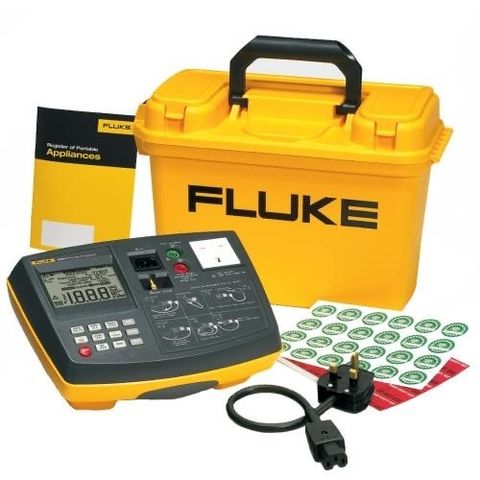
A skilled technician recognizes the significance of their own testing equipment to obtain precise results. A UKAS-accredited lab must periodically test their PAT tester (typically every year) to ensure its accuracy. They must be able provide a valid certificate of calibration for their device. Furthermore, they should be aware of how the device functions, and perform a daily test (e.g. the lead test). They must also be able to comprehend the results of the device, rather than just recording numbers.
7. Ability to Perform Meaningful Visual Inspections in East Midlands
Visual inspections reveal at least 90% of faults. This is a crucial step to a technician. They examines all connectors, plugs and cables as well as casings for wear, damage, or signs that they are overheated. They are also able to correctly connect a plug using the correct fuse rating. Anyone who isn't skilled may rush or even skip the entire process and rely only on their electronic tester.
8. Interpreting results and applying the pass/fail criteria in East Midlands
The tester's electronic circuitry produces readings; it is the technician who makes the judgment. The ability to comprehend and apply the IET Code of Practice limits for pass/fail as well as the appliance's specifications is what is a sign of proficiency. For instance they should be aware of when an slightly higher insulation resistance reading is acceptable or when the earth continuity reading appears acceptable but could actually indicate a latent problem on the appliance in question. The true value of a qualified professional is their ability to take the right decisions.
9. Risk and Insurance Considerations in East Midlands
It's not required however, a technician who is competent must have Public Liability Insurance. This will protect the customer in the scenario that the technician's actions cause property damage while testing. The hiring of a skilled technician strengthens the duty holder's legal defense. It demonstrates that all reasonable measures were taken to ensure a suitable candidate.
10. Communication and documentation skills in East Midlands
Without clear and accurate documentation, the testing process is useless. A skilled technician should produce detailed, legible reports and asset registers that clearly identify every appliance, keep track of all test results and state a clear pass/fail outcome. They must also be able effectively communicate with the responsible person, explaining to them any issues they spot as well as the risk associated with them, and what actions are required (e.g. replacement or repair, etc.). This is crucial to the overall safety procedure. Read the recommended East Midlands emergency light testing for site advice including electrical fire extinguisher, a fire extinguisher, all about fire extinguisher, fire extinguisher using, fire extinguisher using, fire extinguisher for electrical fire, fire extinguisher inspections, fire extinguisher service East Midlands, extinguisher fire extinguisher, fire service and more..
Top 10 Tips For Emergency Support Fire Extinguisher Services in East Midlands
Support for emergency fire extinguisher maintenance is a critical part of your conformity with the fire safety regulations. It's the place where theoretical procedures and real-world urgency meet. According to the Regulatory (Fire Safety) order, the responsible person is required to ensure that the firefighting equipment is in functioning state. In the event of damage, failures or leaks from equipment can create a immediate compliance lapse, and should be addressed immediately. The emergency support services are more than just a service that is merely a convenience. It is a crucial component to a comprehensive fire strategy. They affect the management of risk as well as in ensuring the validity of insurance and continuous operations. A provider's emergency response capability–encompassing availability, communication, technician competence, and logistical readiness–reveals their true commitment to client safety beyond routine maintenance. To evaluate these provisions it is essential to review the service level agreements, geographic coverage restrictions, as well as the actual implementation of response times promised in real-life situations.
1. The Emergency Contact Numbers are readily available 24/7/365 in East Midlands
For genuine emergency assistance, you need to have continuous availability. This means an emergency number that is monitored 24 hours per day, all year, which includes every public holiday. This shouldn't be a normal office number, which is routed to voicemail during late at night. Instead, it should be a dedicated hotline that allows a coordinator to quickly dispatch engineers. The company should have clear procedures in place to handle out of hours calls to ensure that any reported emergency is addressed prior to the next business day.
2. Clear and contractual response time is a guarantee in East Midlands
The vague promises that a "rapid response" will be given are worthless without contractual assurances. Your Service Level Agreements (SLAs) should specify explicit responses that are quantifiable. For instance, priority 1 (critical fault impacting multiple devices) Engineer dispatched within 4 hours of working time. Priority 2 (Single missing/discharged unit) is attendance at the site within 24 hours. The SLA should be clear about these tiers in relation to the risk that is involved, as well as the consequences of being consistently ignored. For instance, you could have the right to terminate or credit service. This turns a promise into an enforceable standard.
3. Local Engineer coverage and geographic deployment
The ability to meet quick response requirements is dependent on geographic logistics. In order to ensure coverage locally, a national provider needs to have engineers strategically distributed. It is essential to ask specifically about engineer availability in the area of your postcode. A company that has engineers located within your region or city will typically be able to meet a four-hour target; one that must send an engineer from a different region cannot. Understanding the strategy they use for deployment is crucial to determine the degree to which their response will be.
4. Emergency Services: Assessment and Repair in East Midlands
An emergency response should be comprehensive. The scope of services should include an immediate assessment on the spot, and the capability to repair using stock carried (seals pressure cartridges for hoses) and the replacement of extinguishers that have been condemned or those that are inoperable from a van equipped with an adequate supply. An engineer's visit to condemn an extinguisher, followed by an absence and a return appointment to replace it is inadequate. The asset is not protected and the building in non-compliance for a long period of time. Emergency assistance is the only way to resolve issues in the first visit.
5. Lending Equipment during the Resolution Period in East Midlands
If there are complex problems that cannot be immediately fixed (e.g. specialist equipment that has to be purchased) A premium support service can provide equipment for loan. This ensures that security against fire is in place throughout the entire procedure of resolution. This demonstrates a service's dedication to continuous conformity. It must be stated clearly if there is a fee. How long is the loan period? How is the equipment loaned tracked and managed? This service will be especially beneficial in situations with high risk, when leaving a source of fire unattended isn't an alternative.
6. Proactive updates and protocols for communication in East Midlands
Clear communication is crucial during an emergency. It is imperative that protocols are followed by the service provider, which includes acknowledgment of the initial call, an estimate of the time of arrival for the engineer, and notification once the engineer arrives at the site. A detailed emergency service report should be completed immediately following the visit. The report should contain the issue, any action taken, and the replacement of components. This report will be used as proof in your records of compliance, as well as any insurance communication.
7. Prices Transparency in Emergency Callouts in East Midlands
For the sake of avoiding disputes, it's important that emergency pricing is explicit. The contract, also known as a price list, must clearly indicate the cost of the call-out in case of emergencies, and include any charges due to nighttime weekend, weekdays, and bank holidays. The contract or price list should clearly state the cost of an emergency call-out including any premiums for weekends, evenings or bank holidays. It should be clear. These rates should be included in the main agreement to ensure that there are no doubts.
8. Experience and Qualification of Emergency Response Engineers
Not just any junior technician can be an emergency engineer. They should have the highest level of knowledge and expertise. They must be able to recognize and fix many kinds of issues in a timely and accurate way, even when under pressure. They should have advanced qualifications like the FIA Unit 010(Overhaul Portable Fire Extinguishers), and extensive expertise. Find out if the provider has a team or specialists who are vetted for emergencies to ensure the responder will be able to be able to match your speed.
9. Integration with Alarm Monitoring and Facilities Management Systems
The integration of emergency support with existing building control systems is essential for large sites as well as high-risk buildings. This includes providing contact information directly to alarm receiving centres (ARCs), allowing faults to be identified by automated monitoring to be promptly reported back to the service provider. Furthermore, the service provider should be in a position to communicate with the facilities management team by following protocols for access to the site and re-educating duty managers.
10. After-Emergency follow-up and compliance reconciliation in East Midlands
The emergency service doesn't end after the engineer has left. The service provider must begin a formal follow-up procedure to conclude the incident properly on your compliance records. This can include issuing an official certificate of compliance for any new equipment, updating your asset register, and asking for a review of your Fire Risk Assessment in order to determine if the event could be a more serious problem (e.g. vandalism in repeated PATterns that require controls). This closed-loop process ensures the problem is dealt with not only technically, but also administratively, returning complete compliance. See the recommended East Midlands fire extinguisher inspection for blog tips including fire extinguisher, fire extinguisher inspections, extinguisher service, fire extinguisher inspections, extinguisher company, extinguisher testing, fire extinguisher inspections, fire extinguisher service East Midlands, testing a fire extinguisher, extinguisher service and more. More broadly, have a look at the most popular fire extinguisher service for more.
